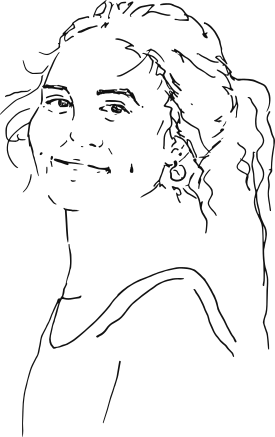
Hi, I’m Caro.
This is my product designer side.
Senior UX/UI Designer at Code & Theory, embedded with iHeartRadio · 8+ years · Barcelona
Answers come only from my case studies. Written by me, no live AI. Still a work in progress: I'm not as smart as Claude (yet).
Selected work
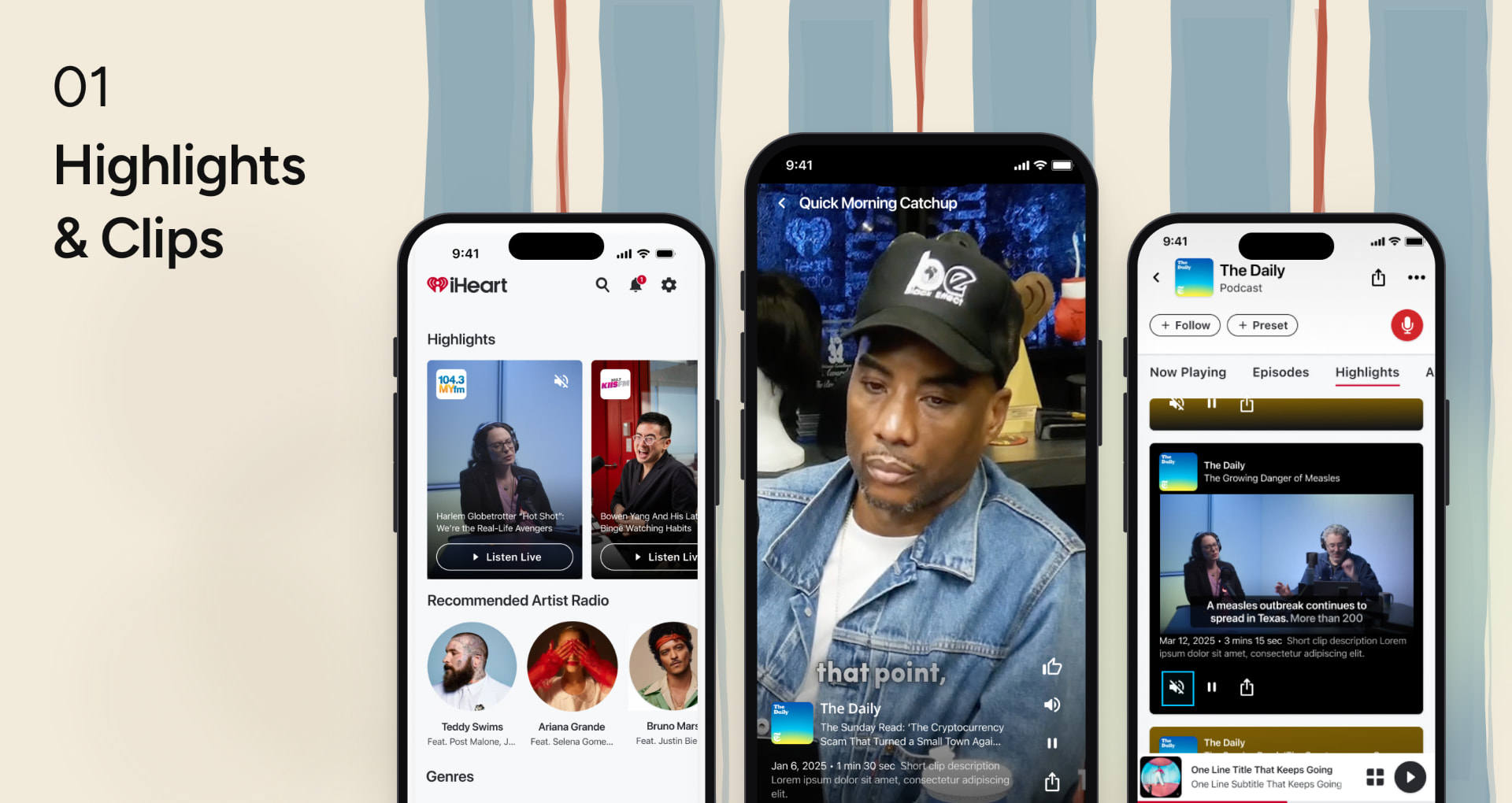
Highlights & Clips
iHeartRadio · Strategy · Taxonomy · AI workflow · 2026
Defining how iHeartRadio tags and personalizes short video clips, with AI as my drafting partner and me in charge of the decisions.
View case →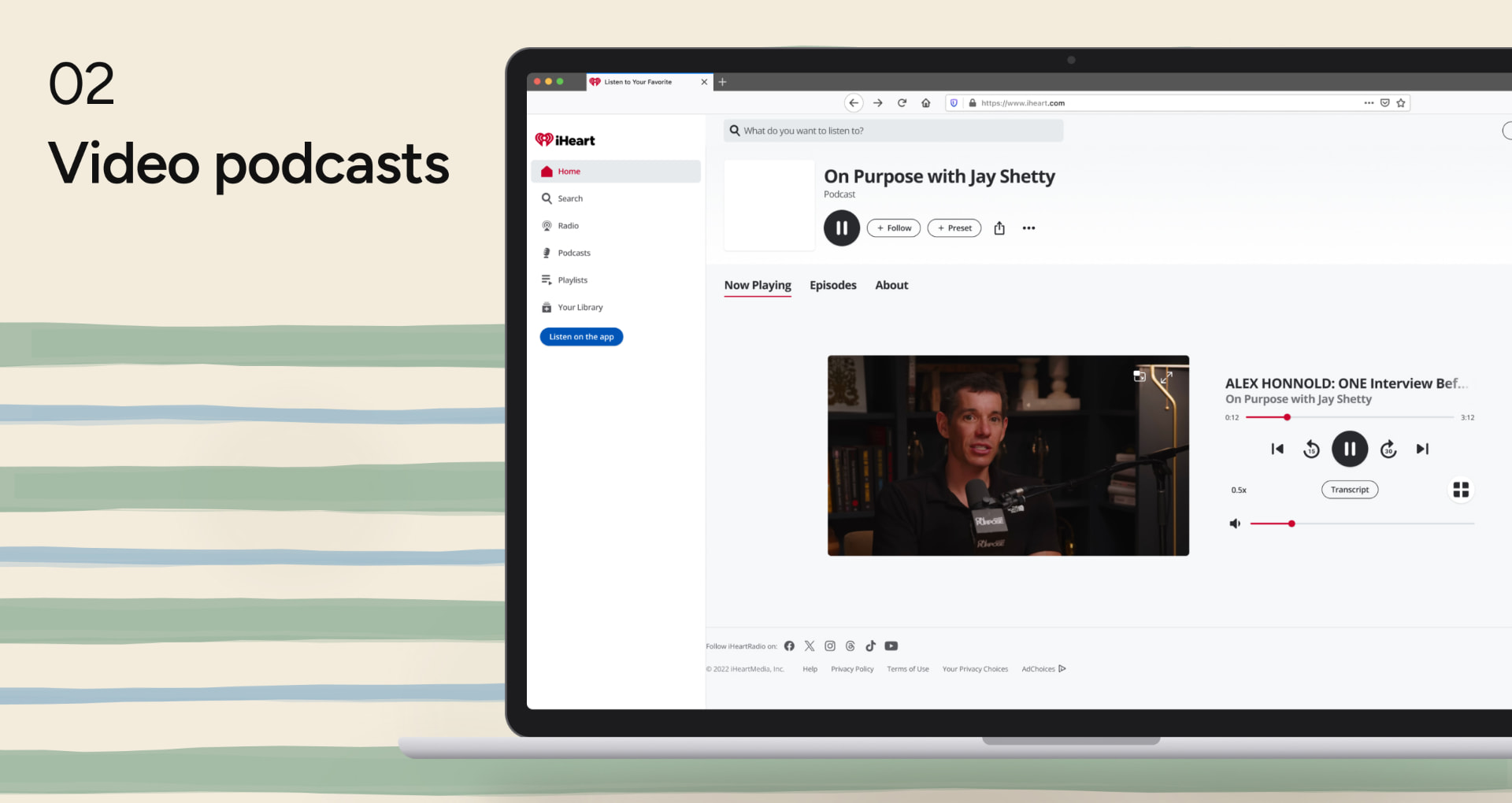
Video podcasts
iHeartRadio · Web lead, cross-platform · 2026
Designing how video podcasts look, play and get discovered across iHeartRadio, without breaking a medium people listen to while doing other things.
View case →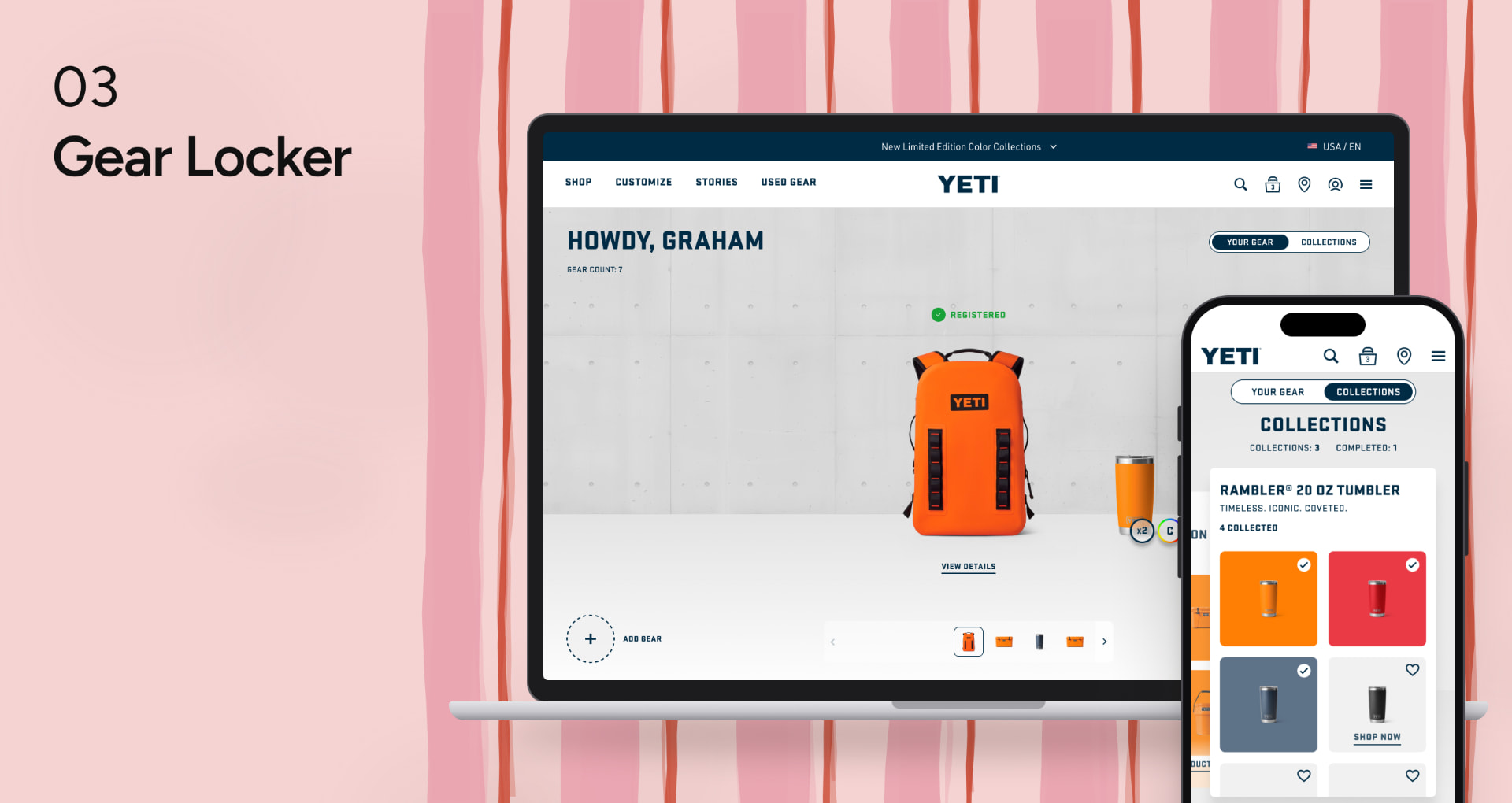
Gear Locker
YETI · UX/UI · Web & mobile · 2024
Designing a home for YETI owners’ gear: registering products, building collections and earning stickers to drive engagement and first-party data.
View case →
More work · short reads
Off-screen
About
I studied graphic and UX design, and never stopped drawing.
Argentine–Italian, based in Barcelona. 8+ years designing for streaming, banking and global brands.
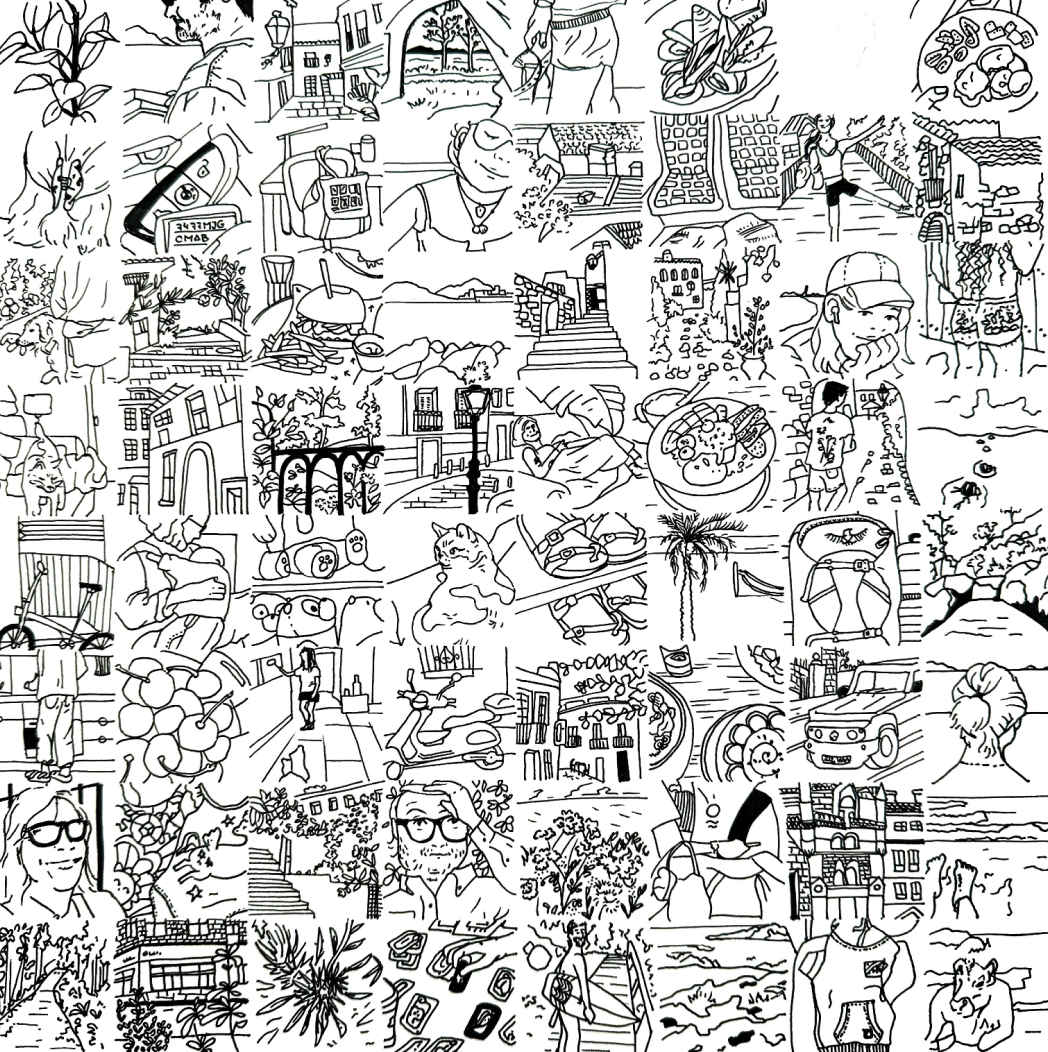
In 2024 I drew a moment of my life almost every week: meals, streets, friends, my cat. 64 small drawings that taught me more about observing than any design course. Outside of screens I also run outdoor drawing workshops.
Who are you?
**I'm Caro, a Senior UX/UI Designer at Code & Theory, based in Barcelona.** I'm embedded with the iHeartRadio product team, and before that I designed for YETI, AT&T, T. Rowe Price, Venmo and Disney. I trained in graphic design, so I care as much about how things look as how they work. Outside of screens, I draw almost every day.
What kind of work do you do?
**End-to-end UX/UI for websites and digital products.** That means research, flows, wireframes, high-fidelity UI, specs and QA with engineering. Lately I've also been doing more strategy, like defining the content taxonomy and personalization rules for iHeartRadio's video clips.
Which clients have you worked with?
**At Code & Theory: iHeartRadio, YETI, AT&T, T. Rowe Price and The Kin (Mars Petcare).** Before that, I worked on Venmo's stocks and investing section, a Disney device-testing platform through Qubika, and Santander's banking experience. So: streaming, fintech, retail and pet care.
Where are you based? Do you work remotely?
**I'm in Barcelona, and I've worked remotely with US teams for years.** I'm used to async work, clear written updates and overlapping hours, so time zones haven't been a blocker.
What languages do you speak?
**Spanish is my native language, and I work in English every day.** All my current work, from specs to stakeholder reviews, happens in English.
Can I see your CV?
**Sure, you can download it from the CV link in the menu or in the contact section.** It has my full experience, clients and dates.
How can I contact you?
**The easiest way is email: caro.marchiori@gmail.com.** You'll also find my LinkedIn and my CV at the bottom of the page.
How do you use AI in your work?
**I use AI as a drafting partner, and I stay in charge of the decisions.** Claude helps me with research, first drafts of tables and boards, and keeping files in sync. That frees my time for the parts that matter: the insights, simplifying, and the conversations with the team. The Highlights case shows exactly how that loop works.
How do you work with engineers?
**Closely, from the first sketch to launch.** I write specs that answer questions before they come up, review builds and do visual QA. On Video podcasts I found 9 bugs in the end-to-end QA, and more than once engineering found the answer to a question already in my Figma notes.
Do you do research?
**Yes, and I use it to make decisions.** On Video podcasts, two rounds of moderated research changed what we built: people split 50/50 on layout but agreed on multitasking, so we invested in picture-in-picture and the mini player. On Gear Locker I benchmarked 8 brands, and on The Kin research shaped three personas.
Show me something visual
**Gear Locker and The Kin are the most visual ones.** Gear Locker has YETI's product pages, collections and registration flow. The Kin has a warm, illustrated onboarding and a playful pet quiz. And if you like drawings, my sketchbook has watercolor, ink and clay.
Do you have experience with design systems?
**Yes. I build and maintain components in client design systems.** I make sure they stay consistent, accessible and easy for engineers to use. At iHeartRadio I also explore new Figma features, like Slots, to keep the system flexible.
Do you care about accessibility?
**Yes, it's part of the spec, not an afterthought.** In Gear Locker every color swatch has an accessible name like “King Crab Orange”, dynamic updates are announced to screen readers, and every animation has a static version for people who prefer reduced motion.
Why do you draw?
**I studied graphic design and never stopped drawing.** In 2024 I drew a moment of my life almost every week, and I paint outside whenever I can. It trains the same muscle as design: paying attention to what's really there.
What is Gear Locker?
**A space on YETI's website where owners register their products and see everything they own in one place.** For owners, it's warranty, care and collections in one spot. For YETI, it's something it never had: a reliable picture of who owns what, to build a long-term relationship.
What was your role on Gear Locker?
**I led the initiative as Product Designer.** I worked with a PM, a visual designer, an experience designer and five engineers, from the benchmark and exploration to the MVP scope, flows and accessibility specs. It ran from October to December 2024.
What was the key decision in Gear Locker?
**We cut almost everything fun from the MVP to prove one thing first.** Gamification, community and storytelling were all on the table, but the real question was whether people value registering their products online. So the MVP focused on registration and the gear overview, and the rest was planned to come once we had evidence.
What research did you do for Gear Locker?
**I benchmarked 8 brands to see how they keep people coming back after a purchase:** Sephora, Adidas, Strava, Klarna, Whering, Peloton, Tesla and Nike. Three patterns showed up: a place for what you own, rewards for showing up, and a sense of belonging. The first one became the core of the MVP.
How did registration work?
**Three ways in, one finish line.** You can start from your order history, with a serial number or QR code, or by finding the product manually. Then the flow narrows one decision at a time: type, exact color, an “Is this your product?” check, and you land in your locker. It also handles messy cases, like an empty order history.
What was the impact of Gear Locker?
**We defined success around the behavior we needed to prove, not vanity metrics.** Products registered for adoption, return visits and completed collections for engagement, and complete product information for data quality. The MVP gave YETI a reliable ownership dataset to build the next phases on.
What is the Highlights project?
**iHeartRadio was bringing short video clips into the app, with no shared way to describe them.** I defined the taxonomy that tags every clip, mapped where clips live in the app, and turned it into personalization rules. The taxonomy is done and shared with the clips partner; personalization is in progress.
How did AI help on Highlights?
**AI drafted, I decided.** Claude produced first versions of tables, boards and Slack messages in minutes, checked facts against iHeart's public data, and kept files in sync when wording changed. The key insights, like realizing the clips partner wouldn't do the matching, came from me and my team.
What is a content taxonomy?
**A shared way to describe content.** For clips, the trick was realizing that most tags can come from the show the clip was cut from: source, genre, location, language. Only a few things, like the topic or whether it's local or evergreen, need to be read from the clip itself, and AI does the first pass there.
How does the personalization work?
**We turned every signal iHeart has about a listener into a rule.** We listed 23 signals, from presets to time of day, and for each one decided which clips to show, which tags make it work, and what to show when there aren't enough clips. Time of day, for example, tells us which show someone hears, not what mood they're in.
Where do clips appear in the app?
**On Home, Search, and the Radio and Podcasts tabs.** Each surface uses a different mix: Home leans on listening behavior, Search on what's popular, Radio on stations and location, and Podcasts on the show you're listening to. We started with Home and Search because they didn't need new screens.
How did you handle legal constraints?
**I designed with Legal, not around it.** When restrictions on user data came up, I split every personalization rule into two versions, “low legal risk” and “every option”, with a Legal column. The conversation became a yes or no per row instead of a blocker.
What was the Video podcasts project?
**Adding video to iHeartRadio's podcasts without breaking how people already listen.** I led the web experience end to end and partnered on iOS. It launched as an A/B test in April 2026 and rolled out to everyone in June.
Why was video tricky for iHeart?
**Because podcasts are a multitasking medium.** People listen while commuting, cooking or working, and iHeart's strength is audio. A video feature that ignored that would add friction, not value. So the design kept audio first and made video one tap away.
What did the research show?
**People wanted the choice, but mostly to keep doing other things.** In round one, Listen first and Watch second felt natural. In round two, layout split people 50/50, but 70% put multitasking first, like picture-in-picture. So we invested where they agreed: leaving the page without losing the video.
Why is Listen before Watch?
**Because research showed it felt natural, and audio is iHeart's strength.** Listen stays primary on every episode, and Watch sits next to it as a secondary option. Nobody loses the habit they already have, and video is always visible.
What trade-offs did you face?
**After the MVP we had to decide what “Play” means on an episode with video.** I laid out two options with their pros and cons: remove the play button on Watch, or keep one play button and add a Listen/Watch toggle. We went with the toggle, and it shipped on mobile in September 2026.
Did Video podcasts launch?
**Yes.** It soft launched as an A/B test in April 2026 and rolled out to 100% of users on iOS, Android and web in June, with a marketing launch. A Listen/Watch toggle followed on mobile in September, and TV and casting are next.
How did you QA the build?
**Visual QA on every piece, and an end-to-end pass on web.** I found 9 bugs across the 5 areas I owned and made the design calls on the ones that needed one, like making sure picture-in-picture only opens when the user asks for it.
What did you do for The Kin?
**I redesigned how new pet parents get into The Kin, a pet care app from Mars Petcare.** That meant onboarding, expert chat and a playful pet quiz, plus the web sign-up before it. In the first 6 weeks, 81% of new users completed onboarding and sessions got 25% longer.
What is the Mob Jam case?
**A UX/UI case study I did for an interview with Voodoo.** I analyzed Mob Jam, a casual puzzle game, at a system level: its architecture, the player journey, the UI and the end-of-game flow. My proposals were about making purchases feel earned instead of forced. It's a concept, not shipped.
Do you have experience with games?
**Not shipped work, but I did a full UX/UI audit of Voodoo's Mob Jam.** It covered the game's architecture, the player journey, UI patterns and monetization moments, with proposals to make buying something feel earned instead of forced.
What is Brava Art?
**My own project: mindful outdoor drawing workshops.** We get together outside to slow down and draw what's in front of us. You'll find it at brava-art.com and on Instagram as @braava.art.
Can I see your drawings?
**Of course.** My sketchbook has watercolor, ink, a bit of digital and, lately, clay. Most of it is made outside, with a small kit and whatever is in front of me.
How many years of experience do you have?
**8+ years as a product designer.** I started at Santander, moved on to a Disney project through Qubika and to Venmo, and since 2022 I've been a senior designer at Code & Theory, working with iHeartRadio, YETI, AT&T, T. Rowe Price and The Kin.
What tools do you use?
**Mostly Figma and Google Sheets, with Claude as a drafting partner.** Sheets is great for working with engineering and data: dropdowns and yes/no questions get faster answers than a design file. And I still sketch by hand.
What is your design process?
**I start from the system, not the screen.** First I understand the business and the people, then I map the flows and decide what to build first. Then I design, spec and QA it with engineering. Gear Locker shows the scoping, Video podcasts the research and QA, and Highlights the strategy side.
Which industries have you worked in?
**Streaming, fintech, retail and pet care.** Streaming and audio with iHeartRadio and Disney, fintech and banking with Venmo, Santander and T. Rowe Price, retail with YETI, telecom with AT&T, and pet care with The Kin.
Have you led projects?
**Yes.** I led Gear Locker for YETI as the product designer, and the web experience for video podcasts at iHeartRadio. In both I worked end to end with PMs, researchers and engineers, from scoping to QA.
Do you do UI, or just UX?
**Both.** I go from research and flows to high-fidelity UI and detailed specs. I trained in graphic design, so visual craft matters to me as much as the logic behind it. Gear Locker and The Kin are the most visual examples.
Are you open to new opportunities?
**Yes, I'm open to senior UX/UI roles.** Remote, or in Barcelona. Write me at caro.marchiori@gmail.com.
What did AI get wrong?
**First versions were always too complex.** AI tends to add layers, options and edge cases, so my job was to simplify until it clicked. It also couldn't reach things like the live product or internal tools, so I checked those myself.
Will AI replace designers?
**I don't think so, but it changes where our time goes.** In my work, AI made everything around a decision faster: drafts, research, keeping files in sync. The decisions, the insights and the conversations with people still came from people.
Why should we hire you?
**I connect strategy and craft.** I can define a content taxonomy or scope an MVP, and then design and spec the screens down to the last 8px. I work closely with engineering, I use AI to move faster without giving up judgment, and my drawing practice keeps my eye sharp.
What's your favorite project?
**Highlights & Clips, because it stretched me the most.** It wasn't about screens: it was about defining how an app understands its content. It's also where I learned to work with AI as a real partner.
How do you handle disagreements with stakeholders?
**I bring options, not opinions.** When the team wasn't sure what “Play” should mean on video episodes, I laid out two options with their pros and cons so we could decide with eyes open. With Legal on Highlights, I split each rule into two versions, so it became a yes or no per row.
How do you measure success?
**By the behavior we need to prove, not vanity metrics.** On Gear Locker that meant products registered, return visits and data quality. On Video podcasts: the watch vs. listen ratio, completion and installs from host mentions. On The Kin, onboarding completion reached 81% and sessions got 25% longer.
How do you prioritize when there's little time?
**I ask what we need to learn first, and build only that.** On Gear Locker, we scoped the MVP to registration and the gear overview because that was the risky hypothesis. On Highlights, we started with the placements that didn't need new screens.
Tell me about something that didn't work.
**On The Kin, asking for a pet photo during onboarding made people drop off.** We simplified it and made it optional, and we moved the pet quiz after sign-up, which doubled completions. It taught me to ask for data only once people trust you.
What are you learning right now?
**Designing with AI as a real part of the workflow.** On Highlights I used Claude across the whole project, and I keep finding new ways to use it without giving up the decisions.
What are your salary expectations?
**Happy to talk about it directly.** Write me at caro.marchiori@gmail.com and tell me a bit about the role, and we'll find the right number together.
Tell me something interesting about you.
**I teach people to draw outside.** Brava Art is my own project: mindful outdoor drawing workshops. And in 2024 I drew one moment of my life almost every week: meals, streets, friends, my cat.
How do you work with product managers?
**As partners on the same problem.** I like to agree on the order of work before building anything, so each step answers what the next one needs. On Highlights, that meant a clear sequence: data checklist, rules, placements, then personas.
What changed after The Kin launched?
**We watched people use it and changed four things.** We moved the pet quiz after sign-up (2× completions), simplified the photo upload, added playful microcopy (+15% engagement), and made real experts more visible, because they built trust even for people who never used them.